Amazon PPC is one of the highest-leverage tools available to sellers — and one of the most wasteful. The core reason for that waste is a timing problem: most sellers are bidding on keywords without knowing where they already rank organically at the moment the ad runs.
If you rank #1 organically for a keyword, running PPC on that keyword is not driving incremental sales. It is taking credit for sales that would have happened anyway, while burning budget and inflating your ACoS. This is ad cannibalization, and it is pervasive.
The data problem behind ad cannibalization
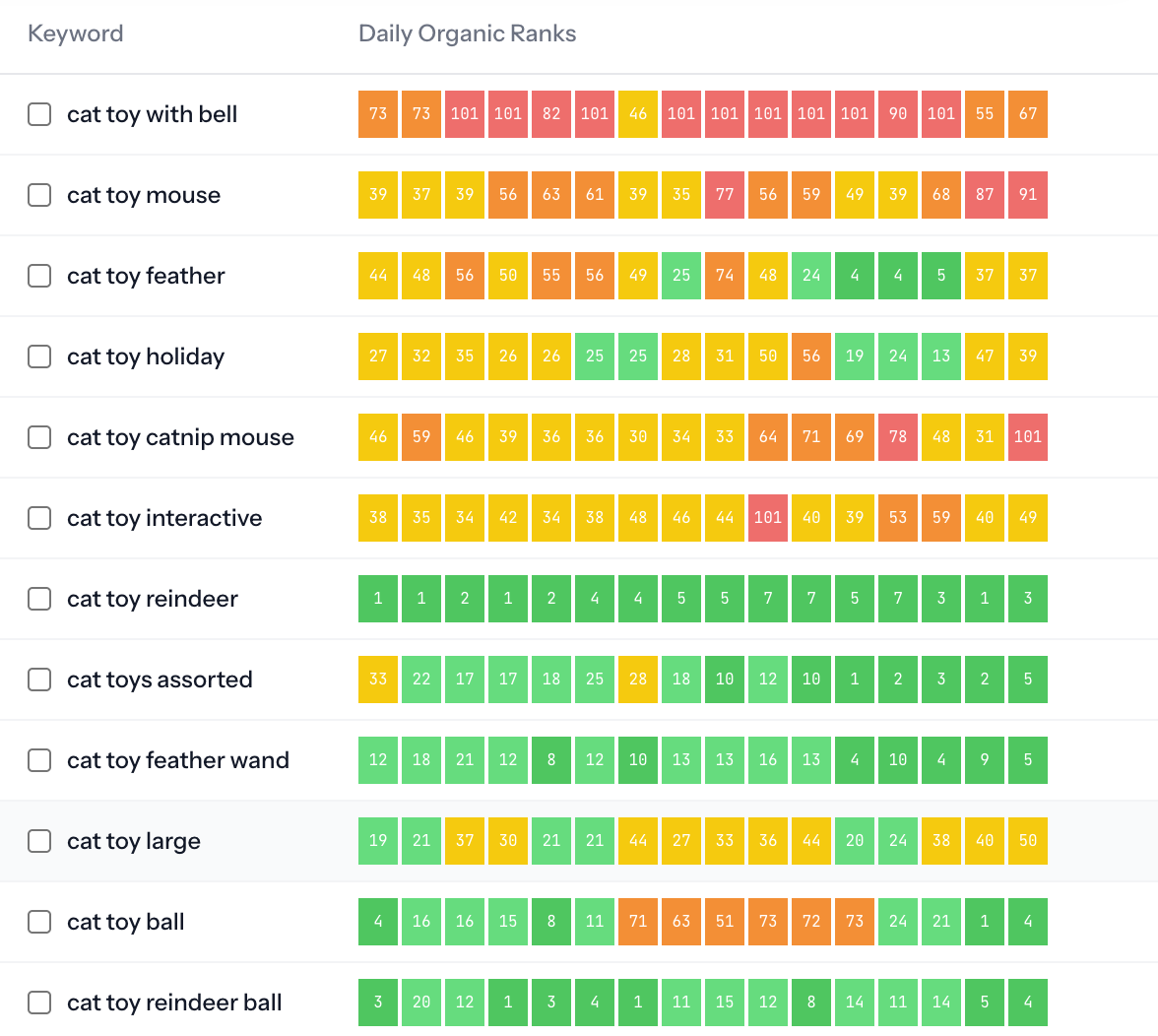
Keyword ranks on Amazon are not static. They shift by the hour based on sales velocity, conversion rate, click-through rate, and relevance signals. A keyword where you rank #3 at 9am might move to #1 by 2pm after a sales spike — and then back to #5 the next morning after a competitor runs a flash deal.
If your PPC campaigns are configured based on a weekly rank report, you are always bidding on yesterday's data. That lag is where money gets wasted.
What real-time rank tracking enables
With access to real-time Amazon search result page data — by keyword, by marketplace, by hour — you can build a system that:
- Enables PPC for low-ranking keywords — When a keyword from your SQP drops below your target rank threshold (say, position 10), automatically activate or increase bids to drive traffic and recover organic rank.
- Pauses PPC for high-ranking keywords — When a keyword is already ranking in positions 1–3 organically, pause or reduce PPC spend on it. The organic position is doing the work. Let it.
- Detects rank volatility — Some keywords fluctuate heavily. Flag them for manual review rather than automated toggling, since they may need a structural fix rather than a bid change.
Building the automation loop (or nowadays what we call AI agents :) )
The practical implementation looks like this:
- Pull your SQP keyword list. These are keywords Amazon has confirmed are driving impressions and clicks to your ASINs.
- For each keyword, pull real-time rank data from Asgard's search result pages endpoint. This gives you the exact position your ASIN appears at for that search term right now.
- Compare current rank against your thresholds. Define what counts as "ranking well" and what counts as "needs support" for your specific category.
- Write the result to your campaign management system. If rank is above threshold, pause the ad group or reduce bid. If rank drops below threshold, activate it.
- Repeat on a schedule — hourly for volatile categories, every 4–6 hours for stable ones.
The SQP connection
Your Search Query Performance report is the best source for which keywords actually matter for your ASINs. It shows click share, conversion share, and impression share by search term — which tells you which keywords you should be defending organically and which ones you need PPC to support.
The rank tracker system described above works best when seeded with SQP keywords rather than manually curated lists. SQP-sourced keywords are the ones where organic rank movement has the most direct revenue impact.
What this looks like at scale
For a catalog with 50 ASINs and 200 tracked keywords each, that is 10,000 rank data points to refresh hourly. Manual management is not possible. The only way to do it is with a data infrastructure that pulls fresh rank data continuously and feeds it directly into campaign logic.
Asgard's search result pages endpoint returns real-time SERP data for any keyword and marketplace. At the scale required for automated PPC management, you need an API that handles anti-bot protection, proxy rotation, and CAPTCHA resolution transparently — so your application just gets clean rank data without managing the scraping infrastructure.
The result is a PPC system that is always calibrated to current organic performance, not last week's snapshot. That is where the efficiency gains come from.