Every time a TikTok viewer comments "where can I buy this?" and gets no answer, that's a sale leaking straight to a competitor. On a viral video the most common high-intent comment isn't praise — it's people asking where to get the product. If there's no link, that demand doesn't disappear; it goes to whoever ranks first on Amazon or Google for the item. Here's why the where-to-buy gap is the most expensive mistake in social commerce, and how to close it with the Asgard TikTok API.
Quick answer
- The problem: viewers openly ask where to buy, and most videos give them no path to purchase.
- The cost: that intent converts — just for a competitor who's easier to find.
- The signal: "product sourcing" is often the #1 comment category on high-performing videos.
- The fix: detect sourcing comments at scale and close the gap — add links, source the product, or retarget.
What the where-to-buy gap looks like
Read almost any viral product video and you'll see the same comments, over and over:
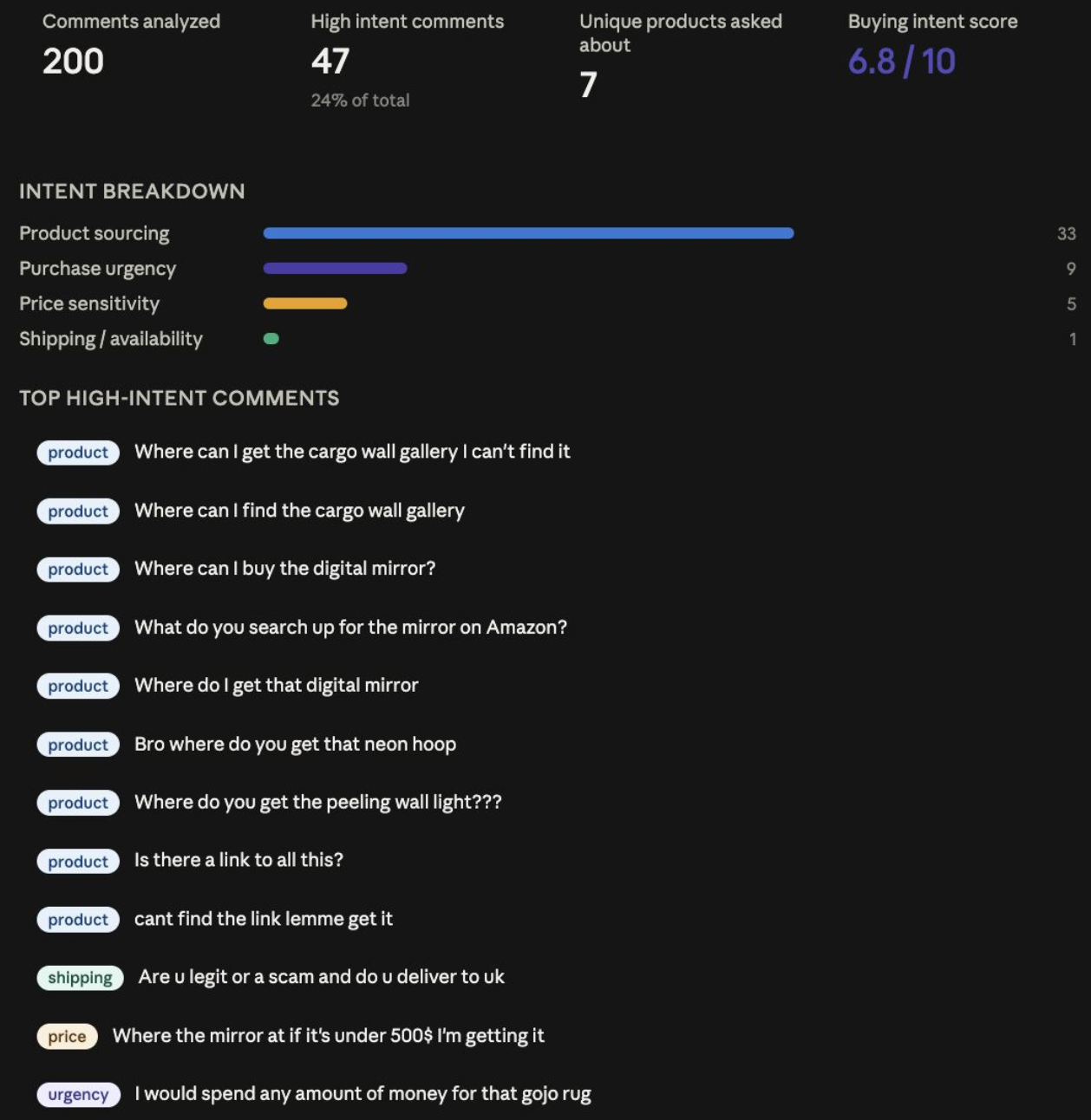
- "Where can I get the cargo wall gallery, I can't find it"
- "Where can I buy the digital mirror?"
- "What do you search up for the mirror on Amazon?"
- "Is there a link to all this?"
- "Can't find the link, lemme get it"
These aren't casual comments — they're people with their wallet out, asking you to take their money. When "product sourcing" is 33 of 47 high-intent comments on a single video, the demand is overwhelming and the conversion path is missing.
Why the gap is so expensive
- It's your highest-intent audience. Someone asking "where do I buy this" is further down the funnel than any ad impression.
- The demand doesn't wait. If they can't buy from you in seconds, they search — and land on whoever ranks, not necessarily you.
- Virality is temporary. The intent spikes while the video trends; miss the window and it's gone.
- It compounds. Every unanswered "where to buy" also signals to future viewers that there's no easy way to purchase.
- You already paid for it. The content did its job and created demand — losing it at the buy step wastes the whole effort.
How to detect and close the gap (step by step)
- Pull the comments. Use the TikTok comments endpoint to collect every comment on your (and competitors') product videos.
- Classify sourcing intent. Flag every "where to buy / link / can't find it" comment and count unique products asked about.
- Rank by demand. Sort videos and products by volume of sourcing comments — that's your priority list.
- Close the loop. Add the buy link everywhere, pin it, and reply to the top sourcing comments directly.
- Source what you don't sell. Repeated demand for a product you don't carry is a sourcing/assortment opportunity.
Do it for competitors too
- Find unmet demand. Competitor videos full of unanswered "where to buy" comments are demand you can capture.
- Spot trending products early. A surge of sourcing comments on a product is a buy/stock signal before it's saturated.
- See the geographic gaps. "Can't find them on Amazon UK?" tells you exactly which market to serve.
Frequently asked questions
Why do "where can I buy this" comments matter so much? They're the highest-intent signal on TikTok — viewers ready to purchase. With no link, that intent converts for a competitor instead of you.
How do I find these comments at scale? Pull comments with the Asgard TikTok comments API and classify sourcing intent automatically, rather than scrolling manually.
Can I use this on competitors' videos? Yes — competitor videos full of unanswered sourcing comments reveal unmet demand and trending products you can capture.
What should I do the moment a video trends? Add and pin the buy link, reply to top sourcing comments, and make sure the product is findable where viewers search (Amazon, Google, your store).
Related reading
- What TikTok comment sections tell brands about buying intent
- Stop chasing viral views — rank TikTok videos by buying intent
- Best scraping API for Amazon keyword rank tracking in 2026
Stop leaking demand — capture every "where to buy":
☞ Asgard TikTok API · docs at asgardata.com