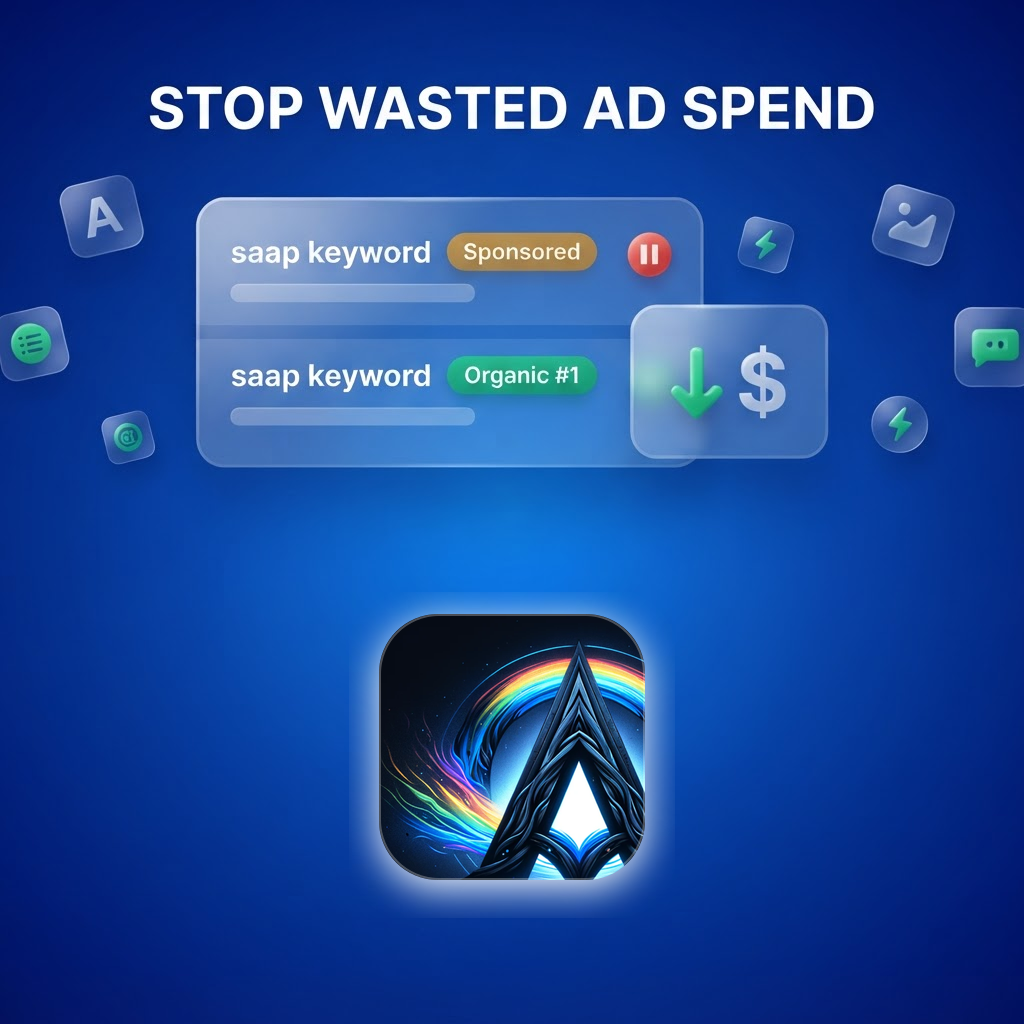
The single fastest way to cut wasted Amazon ad spend is to track organic and sponsored ranks together and automatically pause (or cut bids on) any keyword where you already hold the #1 organic position. If you're organically #1 and paying for the sponsored slot on the same term, you're buying a sale you'd win for free. This automation was never practical before because rank data wasn't realtime — you can't make a daily bid decision on week-old ranks. With Asgard's realtime rank tracker, PPC tools can finally build it.
Quick answer
- The waste: paying for sponsored placement on keywords where you're already organic #1.
- The fix: track organic + sponsored rank together, and pause/reduce ads when organic hits the top.
- Why it wasn't possible: legacy rank trackers refresh weekly, so daily bid decisions ran on stale data.
- What changed: Asgard tracks organic and sponsored ranks in realtime, so the pause rule can run every day.
- Who builds it: PPC/repricing tools wire it as an automation on top of the Asgard API.
The expensive overlap nobody watches
Every brand running Amazon PPC has a set of keywords where they rank #1 organically and still run ads. On those terms the ad is largely cannibalizing a click the shopper would have given the top organic result anyway. You pay full CPC for a conversion you already earned.
- It hides in "good" campaigns. High-ranking keywords look like winners in the ad console — low ACOS — so nobody questions them.
- The organic result is right below the ad. When you own both, the shopper sees you twice and you pay for one of them needlessly.
- It scales with your catalog. The more terms you dominate organically, the more you quietly overspend.
The rule: pause ads when organic rank hits #1
The logic is simple once you have both ranks side by side, per keyword, per day:
- Track organic rank AND sponsored rank for each target keyword, from the same location.
- Detect the overlap — organic position is #1 (or top 3) while you're also holding a sponsored slot.
- Pause or cut the bid on that keyword so you stop paying for the free sale.
- Watch organic rank after pausing. If it slips out of the top, turn the ad back on automatically.
- Keep spending where it works — terms where you're organically weak still get full ad support.
It's a closed loop: ads defend the positions you don't own organically, and step aside on the ones you do.
Why this was impossible before: rank data wasn't realtime
The rule is obvious. The reason brands couldn't run it is entirely a data problem:
- Legacy trackers refresh slowly. Weekly (or "whenever the crawl finishes") rank updates can't drive a daily bid decision.
- Stale ranks are dangerous. Pausing an ad based on last week's #1 — when you've since dropped to #6 — actively loses sales.
- Manual checking doesn't scale. Nobody is going to eyeball organic vs sponsored rank for thousands of keywords every morning.
- Location noise broke consistency. Organic rank changes by zip, so trackers using random locations produced ranks you couldn't trust day to day.
So the overlap kept costing money, not because the fix was unknown, but because the rank data couldn't support a daily automation.
What makes the automation possible now: Asgard's realtime rank tracker
- Realtime ranks. Organic and sponsored positions are pulled live on demand, so the pause rule runs every day (or intraday) on fresh data.
- Organic and sponsored together. One call returns both, so you can compare them per keyword without stitching two data sources.
- Complete sponsored capture (~98–99%). Amazon-specific retries capture nearly all sponsored placements — higher than any other Amazon scraper — so you actually see when you hold the ad slot.
- Zip-locked consistency. Every pull is locked to the zip you choose, so organic rank trends are real change, not location noise.
- Built for automation. Fast, structured responses via the Asgard API make it easy to run as a scheduled job inside a PPC tool.
How a PPC tool builds this on Asgard
- Ingest keywords — take each brand's target keywords and the ASINs that should win them.
- Pull ranks daily — call the rank tracker for organic + sponsored position per keyword, zip-locked.
- Apply the overlap rule — flag keywords where organic is #1–3 and a sponsored slot is held.
- Act via the Ads API — pause the ad or lower the bid on flagged keywords automatically.
- Re-check and reactivate — keep tracking; if organic slips, resume the ad. Log savings for reporting.
What brands get out of it
- Lower wasted spend — stop paying for sales you'd win organically.
- Better true ACOS/TACOS — spend concentrates on terms that actually need defending.
- Protected positions — automatic reactivation means you don't lose a ranking by pausing too long.
- A daily habit, not a quarterly audit — realtime data makes it a standing automation.
- A differentiator for the tool — few PPC platforms can offer this because few have realtime organic + sponsored rank data.
Frequently asked questions
How does rank tracking reduce wasted Amazon ad spend? By tracking organic and sponsored rank together and pausing ads on keywords where you already rank #1 organically — you stop paying for conversions you'd earn for free.
Why couldn't brands do this before? Legacy rank trackers refresh too slowly (often weekly), so daily bid decisions ran on stale ranks. Asgard tracks organic and sponsored ranks in realtime, making the daily automation reliable.
Won't pausing the ad make me lose the ranking? That's why the loop keeps tracking after pausing — if organic rank slips out of the top, the automation turns the ad back on. You only pause while organic dominance holds.
Why does sponsored-capture completeness matter here? You can only detect the overlap if the data reliably shows when you hold the sponsored slot. Asgard captures ~98–99% of sponsored placements, higher than any other Amazon scraper, so the signal is trustworthy.
Can our PPC tool automate this? Yes — pull organic + sponsored ranks daily from the Asgard API, apply the overlap rule, and act through the Amazon Ads API to pause or rebid automatically.
Related reading
- Best scraping API for Amazon keyword rank tracking in 2026
- Rainforest API alternative to scrape Amazon in 2026
- How brand protection & IP tools monitor Amazon with a scraping API
Automate the pause-on-organic-#1 rule with realtime ranks:
☞ Free Rank Tracker · Asgard API · docs at asgardata.com