It's not likes, views, or shares — it's how your influencers make watchers feel. As marketers we want to work with creators who influence an audience in a good way to buy our products, and that comes from making people feel trusted, curious, and inspired. But so many creators brands sign end up doing one of two other things instead: entertaining an audience that never buys, or collecting hate. Viral metrics can't tell those three apart — the comment section can. Here's how to find the creators who create positive influence, buying intent, and the highest halo effect, using the Asgard TikTok API.
Quick answer
- The wrong KPI: likes, views, shares — they measure reach, not how the audience feels.
- The right KPI: positive influence — trust, curiosity, and desire that lead to a purchase.
- Three buckets: every creator either positively influences, merely entertains, or collects hate.
- Only one converts. Positive influence drives buying intent and the halo effect; the other two waste budget or do damage.
- How: scrape comment sections and score sentiment + intent with the Asgard TikTok API to find the creators in bucket one.
The three buckets every creator falls into
- Positive influence (the one you want). The audience feels trusted, curious, and inspired — and acts on it. Comments show buying intent, gratitude, and halo signals: "of course we'll order off your storefront", "just bought it because of this video."
- Entertainment (the trap). High engagement, big laughs, lots of shares — and zero purchases. The audience came for the show, not the product. Great numbers, no sales.
- Hate (the risk). The comment section is skeptical, annoyed, or hostile. Partnering here doesn't just waste money; the negativity rubs off on your brand.
Views and likes look identical across all three. The feeling underneath them is completely different — and that feeling is what decides whether you get sales, silence, or damage.
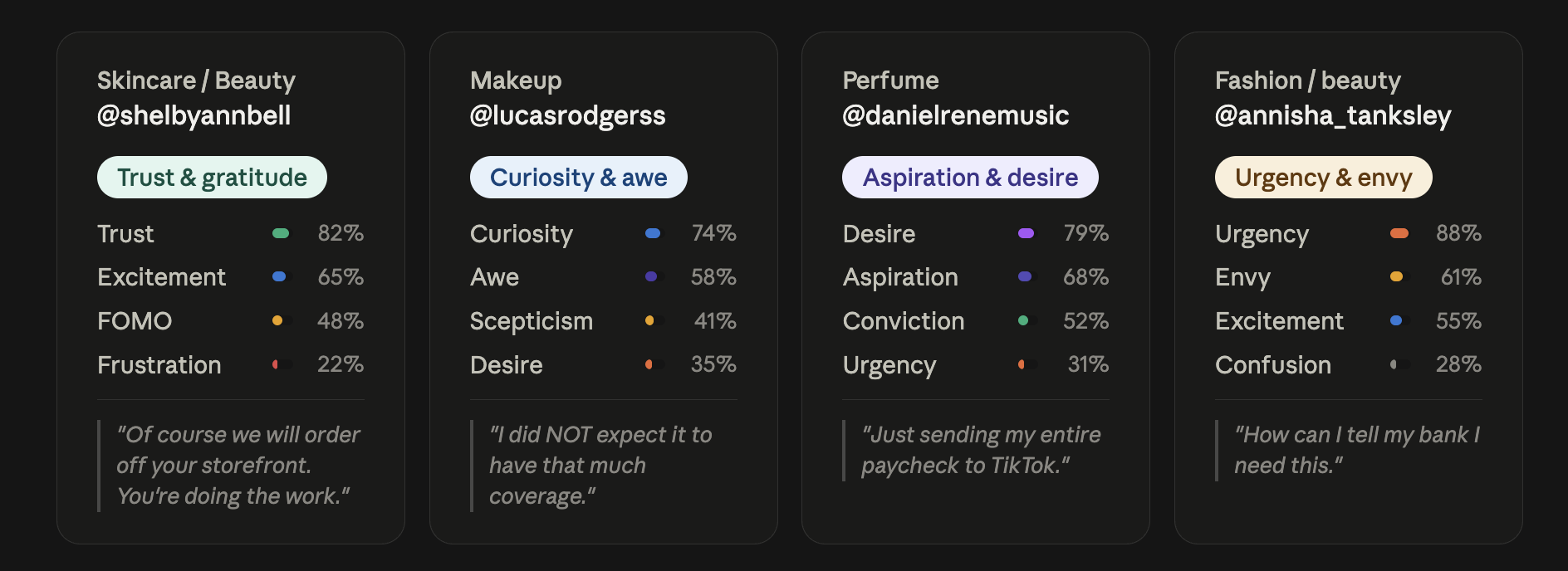
What "good way" influence looks like in comments
- Trust & gratitude. "You're doing the work for us" — a loyal audience that buys on the creator's word.
- Curiosity & awe. "I did NOT expect that coverage" — genuine interest that sends people to check the product out.
- Aspiration & desire. "Sending my entire paycheck to TikTok" — real want that converts.
- Buying intent & halo. "Where's the link?", "ordered on Amazon" — influence that turns straight into purchases across platforms.
Contrast that with bucket two (jokes, tags, "so funny") and bucket three (skepticism, complaints, hostility) and the difference is obvious once you read the words instead of the counts.
How to score for positive influence
- Pull the creator's product videos. Use the profile and search endpoints to gather their relevant content.
- Scrape every comment. Call the comments endpoint for text, likes, and replies.
- Classify sentiment + intent. Tag each comment as positive influence, entertainment, or hate — and pull out buying-intent and halo signals.
- Build a positive-influence score. Combine positive sentiment, buying intent, and halo signals into one number per creator.
- Sign bucket one. Prioritize creators who genuinely influence audiences toward a purchase — and skip the entertainers and the hate magnets.
Takeaway: the metric that matters isn't reach, it's positive influence — measurable directly from how a creator's audience talks in the comments.
Frequently asked questions
Why are likes, views, and shares the wrong metric? They measure reach, not how the audience feels. A creator can be viral while merely entertaining or even collecting hate — neither of which sells your product. Positive influence, scored from the comment section, is what predicts purchases.
What are the three buckets a creator can fall into? Positive influence (audience feels trust/curiosity/desire and buys), entertainment (high engagement, no sales), and hate (hostile audience that damages your brand). Only the first drives conversions and the halo effect.
How do I measure positive influence? Scrape a creator's comment sections with the Asgard TikTok API and classify comments by sentiment and buying intent, then combine positive sentiment, intent, and halo signals into a single score per creator.
What signals show good-way influence? Trust and gratitude, genuine curiosity, aspiration and desire, and explicit buying intent or halo signals like "where's the link?" or "ordered on Amazon." These separate creators who convert from those who only entertain.
Related reading
- Stop picking TikTok creators by views, likes, and shares
- Four creators, four feelings — which one should your brand pick?
- Score TikTok creators by the emotions they make people feel
Find the creators who influence the good way:
☞ Asgard TikTok API · docs at asgardata.com